|
Epic Miami Condo - Residence Features:
Epic
Condo Miami - Kitchen
Features
-
Snaidero cabinetry, designed by
Lucci e Orlandini in dark oak wood with stainless
steel inserts
-
Inlay countertops with full-height
backsplash in white
-
Under counter and interior cabinetry
lighting
-
Miele electric oven with
NavitronicTM controls and oxygen sensor in stainless
steel
-
Miele flat Ceran® electric cooktop
with variable cooking zones
-
Microwave with multi-sensor cooking
mode in stainless steel
-
Exhaust hood in stainless steel
-
Subzero® refrigerator/freezer and
ice maker paneled with Snaidero cabinetry
-
Miele dishwasher with flow-through
heating and thermal drying system with Snaidero
cabinetry
-
Franke double sink in stainless
steel
-
Garbage disposal
-
Zucchetti sink mixer with stainless
steel spring in polish chrome
Epic Condo Miami -
Master
Bath Features
-
Imported Italian Calacatta white
marble floor, baseboard, shower, and toilet wall
-
Marble accents in Gray Bardillo
-
Imported Italian suspended cabinetry
in dark oak finish
-
His and Her vessel sinks in white
high-gloss ceramic
-
Zucchetti faucets and fixtures in
polished chrome
-
Lighted wall mirror
-
Zucchetti bathroom accessory set to
include towel bars, towel rings, and toilet tissue
dispenser
Epic Condo Miami
- Second Bath Features
-
Imported Italian marble floors,
baseboards, shower, and tub walls
-
Imported Italian suspended cabinetry
in light oak finish
-
Vessel sink in white high-gloss
ceramic
-
Zucchetti faucets and fixtures in
polished chrome
-
Lighted wall mirror
-
Zucchetti bathroom accessory set to
include towel bars, towel rings, and toilet tissue
dispenser
Epic Condo Miami -
Powder Room Features
-
Imported Italian Calacatta white
marble floor and baseboard
-
Imported Italian suspended vanity
with clear glass sink
-
Zucchetti faucets and fixtures in
polished chrome
-
Lighted wall mirror
-
Zucchetti bathroom accessory set to
include towel ring and toilet tissue dispenser
Laundry
Ceiling
Epic Condo Miami -
Walls
-
Dual layer drywall with channel and
fiberglass insulation for optimal sound proofing and
privacy
-
Water resistant drywall in bathrooms
and Durock® behind all marble wall locations
-
Designer outlets and switches
Epic Condo Miami -
Doors and Hardware
Epic Condo Miami - Security System and Technology
-
State-of-the-art security system
with keypad at entry door
-
State-of-the-art structured media
panel, pre-wired for a telephone system, HDTV, cable
television, and computer network
-
Fiber-optic building backbone
provides high-speed Internet access
-
HDTV and cable television outlets in
kitchen, living, and sleeping areas
Smart technology available for lighting and
window treatment control systems
Location for Epic
Condo Miami
View
Epic Condo Miami Condo in a larger map
Epic Condo Miami Informaion
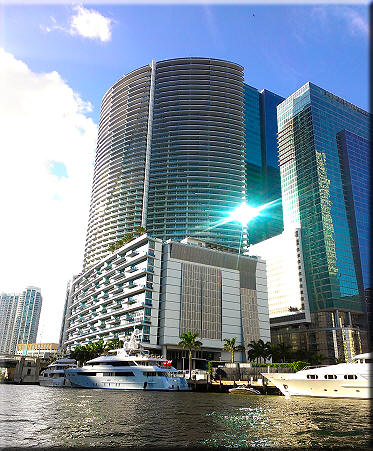
Epic Condo Miami Residences & Hotel. A legendary waterfront
landmark takes its rightful place in Miami's phenomenal skyline. An
address of distinction, becoming of its lineage of more than a century
when it arose as a coveted waterfront resort escape attracting the
world's most recognized names. Flagler. Rockefeller. Vanderbilt. The
world took notice and soon followed. Bringing an exhilarating spirit of
progress and prosperity, evolving Miami into its unique place as
international centre of commerce and style. EPIC living invites those
who would ascend to its legacy. True to form, one, two and three-bedroom
waterfront residences, from 1,040 sq. ft. to a magnificent penthouse of
7.480 sq. ft., spare no detail of comfort and luxury.
Living at EPIC Residences & Hotel means you are
at the epicenter of vibrant, urban energy. Placid waterfront living
merges with all that is exhilarating about city life. Your tall sweeping
glass walls are a window to sunrises dancing on Biscayne Bay. Here, the
city's financial and cultural heart races; languages fill the air and
international currencies energize the economy. Excellent dining spans
the globe and satisfies every discerning palate. Shoppers from virtually
everywhere have made Miami a must-stop destination. Renowned cultural
events grace nearby museums, playhouses, concert halls and the new Miami
Performing Arts Center. And the global gateways at the Port of Miami and
Miami International Airport are conveniently close to home.
EPIC Residences & Hotel affords you access to a lavishness of attention
like no other. It integrates you into the world of Kimpton Hotels, the
undisputed leader in the upscale lifestyle hotel industry and at the
forefront of redefining the boutique hotel experience. Kimpton operates
over 40 stylish lifestyle hotels, each designed to reflect the
personality and pulse of its host city, and is known for highly
personalized guest services, comforting amenities, and welcoming
atmospheres that embrace its signature elements of care, comfort. style,
flavor and fun.
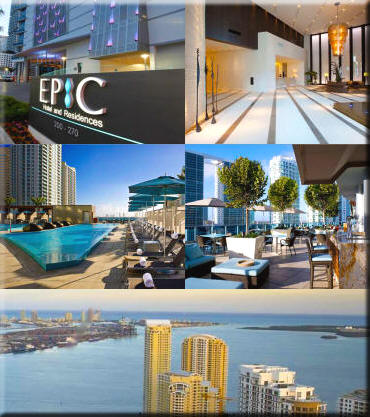
Befitting of its legacy of privilege, EPIC welcomes you home each day to
the unique service and amenities that make life here all the more
comfortable. Retreat to your urban sanctuary in the 12,000 square foot
world-class spa overlooking the tranquil Biscayne Bay. Private treatment
rooms. herbal steam rooms and therapeutic whirlpools bring you a
holistic experience of rejuvenating treatments. Our fitness center
exceeds your expectations with high-tech cardiovascular and weight
training facilities complete with certified personal trainers.
Innovative cuisine, exceptional service and a most delicious ambiance
await you in the exquisite signature restaurant. And outside. private
pools and cascading waterfalls offer a choice of city or bay views to
suit your mood. It is here on this historical site that a fitting new
era begins. as the grandest expression of fine waterfront living
emerges, EPIC Residences & Hotel.
Epic Condo Miami - TAKING ITS PLACE IN HISTORY
It was 1896 and the world's social scene was abuzz
with the latest trophy of entitlement: The Royal Palm Hotel in Miami had
opened her doors to welcome wealthy winter visitors. Henry Flagler had
duly graced the Gateway of the Americas with fashionable luxury and
panache, and everyone intended to be seen promenading her bays ide
boardwalks.
True to the spirit of this glamorous resort, Dupont Plaza continued the
legacy of the address in 1956, and for nearly half a century, lured the
world as a thriving destination scene for vacationers and business
professionals from all corners of the globe.
It is on this historical site that a fitting new era begins: The
grandest expression of fine waterfront living EPIC Residences & Hotel
emerges.
Epic Condo Miami - UNPARALLELED URBAN LIVING
EPIC rises to its legacy and takes its place in the
heart of Downtown Miami with the city's best-of-everything in its
shadow. Uniquely situated at the mouth of the Miami River, EPIC is steps
away from the Brickell Avenue Financial District and moments from the
sun-kissed waters of Key Biscayne. EPIC embraces the energetic ambiance
of downtown living amongst the art, entertainment, and financial
districts. All one might desire for a life well lived is within your
reach: the charming village of Coconut Grove, the unique style of Coral
Gables and the indulgences of South Beach. At your doorstep are the
Miami Performing Arts Center, the American Airlines Arena, Miami
International Airport, world-class shopping and excellent dining.
EPIC Residences & Hotel is a convergence of all that
is exquisite: EPIC is the coming together of the luxury residence
expertise of developer Ugo Colombo with the distinctive hotel savvy of
developers Alfredo and Diego Lowenstein.
With an exceptional eye for style and elegance, Ugo Colombo of CMC Group
is known for bringing luxury high-rise residential developments to Miami
such as Santa Maria Condo
Brickell and Bristol Tower Condo
Brickell, both gracing the Brickell Avenue
skyline. Most recently he completed the
Grovenor House Coconut
Grove on the
prestigious South Bayshore Drive in Coconut Grove.
One of today's quintessential father and son
entrepreneurial teams, Alfredo and Diego Lowenstein of Lionstone
Development have been a prominent force in the hospitality and real
estate industries for more than 30 years, developing such distinctive
properties as The Ritz-Carlton South Beach and other luxury resorts and
residential ventures in the Caribbean.
Epic Condo Miami - Lifestyle
The
Brickell District comes to the forefront of
international business and luxury living. Desire for
waterfront property and Brickell's emergence as Miami's
cosmopolitan center has experienced considerable
development and even grander plans for the future.
Certainly the significance of being the second largest
booming international financial center in the United
States will further stimulate Miami's entire downtown
area and lure new residents and business alike. Brickell
condos rising above the beautiful waters of Biscayne Bay
is one of the most unique and identifiable skylines in
the world. The luxury condominiums on exclusive Brickell
Key and those that line Brickell Avenue provide an
incomparable life of luxury to their residents.
Living in
this exclusive and sought-after location, you will
experience the best that life has to offer. From fine
dining and shops to tree-lined streets where you can
stroll, jog or simply enjoy the natural surroundings
that Brickell has to offer. Ideally and centrally
located, Brickell is located just minutes from Miami
International Airport, Coral Gables, Coconut Grove and
Miami Beach.
Epic Condo Miami - Where to Stay
|
The Epic
Hotel
270 Biscayne Blvd
Miami, FL 33131
Phone: 305-424-5226 | Toll Free:
866-760-3742 |
|
Hilton Miami Downtown
1601 Biscayne Blvd
Miami, FL 33132
Phone: 305-374-0000 |
|
Intercontinental Miami
100 Chopin Plaza, Miami FL 33131
Phone: 305-577-1000 |
|
The
Mandarin Oriental
500 Jade at Brickell Drive
Miami, FL 33131
Phone: 305-913-8288 | Toll Free: 866 526
6567 |
|
Conrad
Miami
1395 Brickell Avenue
Miami, FL 33131
Phone: 305-503-6500 | Toll Free:
800-266-7237 |
|
The Four
Seasons
1435 Brickell Avenue
Miami, FL 33131
Phone: 305-358-3535 | Toll Free:
800-819-5053 |
|
JW
Marriott
1109 Brickell Avenue
Miami, FL 33131
Phone: 305-329-3500 | Toll Free:
800-228-9290 |
|
Hyatt
Regency Miami
400 SE 2nd
Avenue
Miami, FL 33131 |
Things to See Around Epic Condo Miami
Art Deco District
The historic Art Deco district of Miami represents
one of the most spectacular redesigns in modern
history. You may wish to stroll round this splendid
square-mile in your own time; or take a narrated
tour led by Miami Design Preservation League. It’s
striking, very colorful and a little wacky.
Fairchild Tropical Garden
Fairchild Tropical Botanic Garden is one of the
world's preeminent botanical gardens, established in
Miami as the one place in America where tropical
plants can grow all year round. Housing an extensive
collections of rare tropical plants including palms,
cycads, flowering trees and vines.
Villa Vizcaya
Should you be missing a taste of Europe visit the
Italian Renaissance style Villa Vizcaya. Originally
one rich industrialist’s rather grandiose winter
residence this is now a public museum full of art
and fine furniture with quite astoundingly beautiful
formal gardens.
Bass Museum of Art
Whilst Miami has a burgeoning art scene with a
myriad galleries to visit, particularly around
Lincoln Street and the Design District, The Bass
museum houses a uniquely comprehensive collection of
some 3,000 works of art from Boticelli to Caribbean
sculpture. Frequent special exhibitions are held.
Wolfsonian - FIU
Originally the private collection of one incredibly
wealthy individual, Mitchell Wolfson, a tremendous
art deco waterfall is the lobby focus and many of
the pieces are deco inspired. The stupendous
Wolfsonian collection explores the evolution of
design history.
Center for the Performing Arts
Housing four internationally acclaimed resident
companies, the Concert Association of Florida,
Florida Grand Opera, Miami City Ballet and New World
Symphony, the Performing Arts Center provides
extraordinary cultural and educational experiences
of the highest quality.
Where to Shop Around
Epic Condo Miami
Shopping Insider at Mandarin Oriental
Get an insider's guided tour on the 'best of the
best' in Miami shopping with the assistance of a
personal shopping expert. You may book a private
half-day tour or the exclusive Shop Like a Celebrity
Package.
The Bal Harbour Shops
An internationally renowned collection of specialty
boutiques, restaurants and cafes in an impressive
tropical-garden setting. Guests staying at Mandarin
Oriental, Miami will receive a preferred card
chock-full of added value shopping offerings from 30
of Bal Harbour’s most coveted brands.
Village of Merrick Park
A Mediterranean-style outdoor mall consisting of
extremely high-end stores such as Jimmy Choo, Sonia
Rykiel, Neiman Marcus, Miami's very first Nordstrom,
and upscale eateries such as The Palm.
Lincoln Road Mall
A pedestrian-only street mall in South Beach, with
many specialty shops featuring jewelry, clothing and
art, plus an assortment of restaurants. At one time
a haven for eclectic small shops, the mall has come
to favor large national retail chains yet it still
retains a hip buzz.
Epic Condo Miami Association
Management Office
200 Biscayne Blvd, Miami, FL 33131
Enter Website:
Brickell Avenue Condos Page |